Expand the possibilities for your research
The Business Development for the Individual Faculty Researcher (BDIFR) program helps UConn faculty build the knowledge, skills, and connections needed to explore industry-funded research opportunities.
Through practical training and individualized support, faculty learn how to identify potential industry partners, communicate the value of their research, approach prospective partners, and develop relationships that can lead to new research opportunities.
Business development is not about changing who you are as a researcher. It is about gaining new tools to expand who may be willing to fund and support your work.
Register for BDIFR
Who Is BDIFR For?
BDIFR is designed for UConn faculty researchers interested in exploring or expanding industry-funded research.
No previous business development or industry experience is required. The program supports faculty at different career stages and with varying levels of experience working with industry.
What You’ll Learn
BDIFR combines practical business development training with individualized support tailored to your research and goals.
Through the program, participants will learn:
- How to translate your expertise into compelling industry value propositions.
- Methods to identify industry opportunities and attract partnerships.
- UConn’s partnerships, resources, and support networks.
Support continues beyond the formal training sessions for faculty engaged in the program.
What Does Participation Look Like?
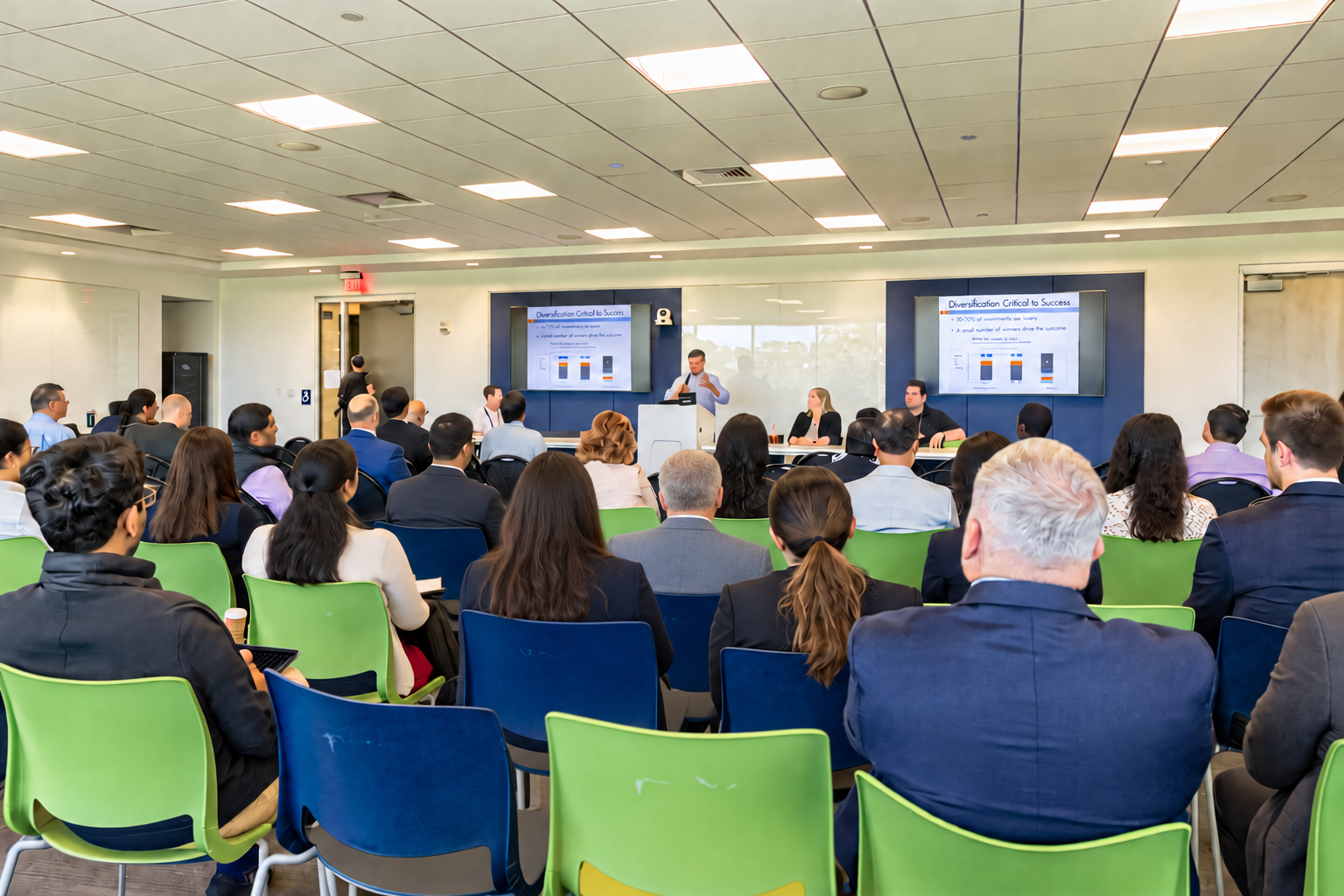
BDIFR is an active, hands-on program that combines in-person training with individualized work and support from UConn business development staff.
Important: For Cohorts 1 and 2, all in-person training sessions will take place on the UConn Storrs campus.
Participants should plan to dedicate approximately 20 hours throughout the semester to BDIFR activities, including training sessions (3 hours each), meetings with business development staff, development of outreach materials, and other program activities.
Cohort 1 In-Person Training Schedule
- October 5, 2026 – First Class
- October 19, 2026 – Second Class
- November 2, 2026 – Third Class
- November 16, 2026 – Fourth Class
- November 30, 2026 – Fifth Class, if needed
Faculty may attend the first session before deciding whether they would like to continue with the full program.
Cohort Information
To provide meaningful individualized support to participating faculty, the 2026–27 BDIFR program will be offered in two cohorts organized around broad research areas.
Cohort 1 | Fall 2026
Health, Life, and Human Well-Being
Inclusive of, but not limited to, the following topics: Allied Health Sciences, Kinesiology, Nutritional Sciences, Pharmacy, Pathobiology & Veterinary Science, Biomedical Engineering, Physiology & Neurobiology, Molecular & Cell Biology, Psychological Sciences, Speech, Language & Hearing Sciences, Human Development & Family Sciences, Cognitive Science, and health-related centers and institutes.
Agriculture, Environment, Sustainability, Food, and Natural Systems
Inclusive of, but not limited to, the following topics: Animal Sciences, Natural Resources & the Environment, Plant Science & Landscape Architecture, Agricultural & Resource Economics, Environmental Engineering, Civil & Environmental Engineering, Earth Sciences, Ecology & Evolutionary Biology, Extension, Environmental Sciences, Geography, Marine Sciences, and climate and sustainability centers.
Cohort 2 | Spring 2027
Technology, Data, Engineering, and Innovation
Inclusive of, but not limited to, the following topics: Electrical Engineering, Chemical & Biomolecular Engineering, Materials Science & Engineering, Mechanical/Aerospace/Manufacturing Engineering, School of Computing, Computer Science, Data Science, Statistics, Mathematics, Physics, Engineering Physics, technology and advanced manufacturing centers, and AI and computational research institutes.
Society, Culture, Communication, and Policy
Inclusive of, but not limited to, the following topics: Anthropology, Economics, Education, Political Science, Sociology, Communication, Journalism, History, English, Philosophy, Linguistics, Languages and Literatures, Human Rights, Women’s, Gender & Sexuality Studies, Africana Studies, American Studies, Urban & Community Studies, and public policy/civic engagement centers and initiatives.
Interested in Participating?
Complete the BDIFR registration form to tell us about your research, industry interests, and goals.
Timing of your designated cohort doesn’t work for you?
Please still complete the registration form!
When you reach the final question, “Is there anything else about your research, industry interests, existing relationships, or goals that would be helpful for the BDIFR team to know as you begin the program?” add a note letting us know that you are interested in participating but are unable to attend your designated cohort. A member of the BDIFR team will reach out to discuss available options.
Have questions about BDIFR or need help? Please contact Victoria Lowther at Victoria.Lowther@uconn.edu for assistance.